Edited by David E. James
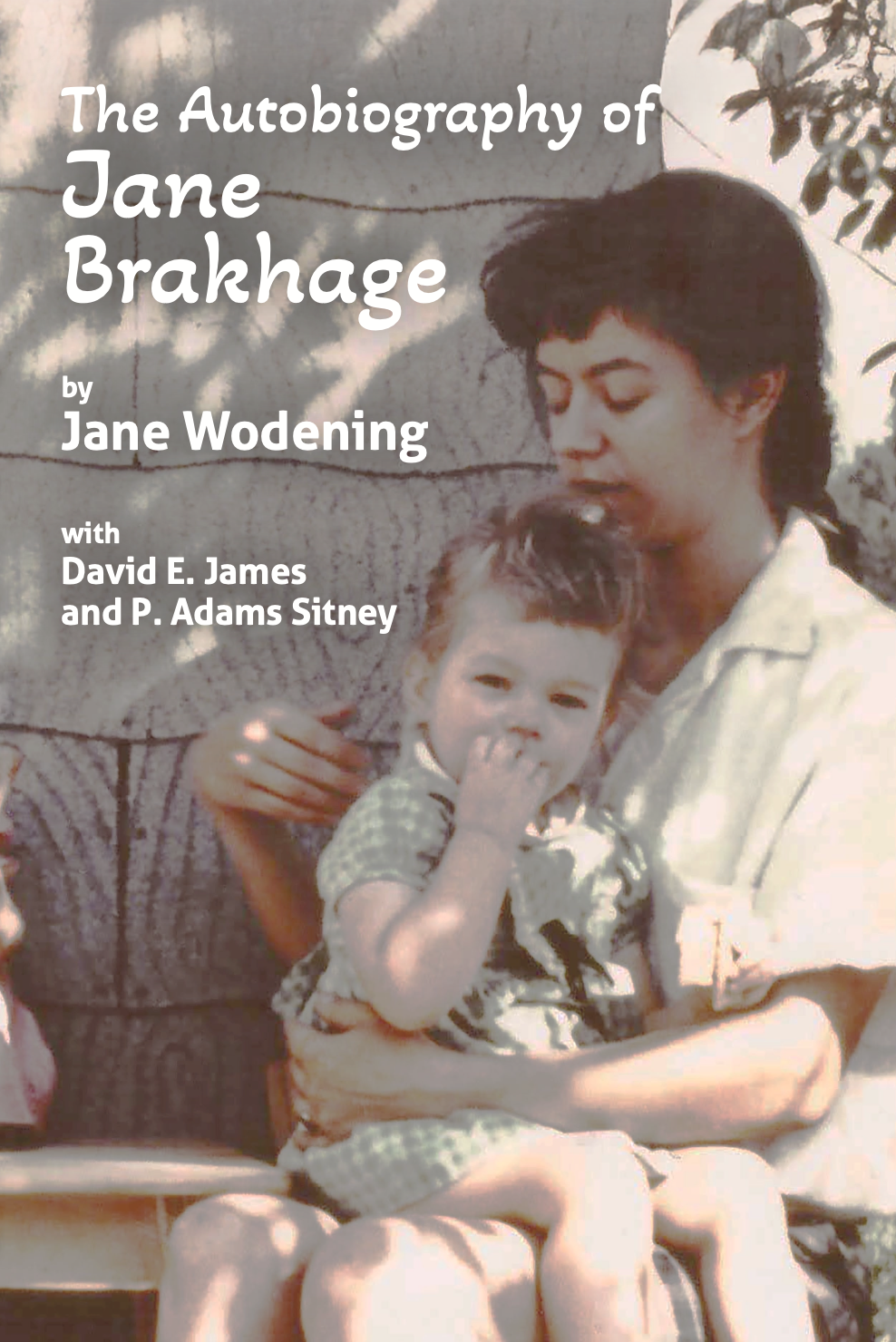
In The Autobiography of Jane Brakhage, Jane Wodening—writer, naturalist, and longtime collaborator of legendary avant-garde filmmaker Stan Brakhage—tells her own story at last. Speaking with candor, wit, and startling emotional clarity, she traces a life that begins in Depression-era Illinois, where a lonely child found her first language in the company of dogs, and unfolds through the mountains of Colorado, where wilderness, animals, and solitude shaped her imagination. As muse, collaborator, amanuensis, distributor, and the luminous on-screen presence in many of Brakhage’s films, she stood at the center of one of the most radical bodies of work in American cinema—yet her own creative identity remained, for Brakhage decades, submerged.
This autobiography reveals the woman behind the myth: a fiercely intelligent spirit who endured a turbulent thirty-year marriage, raised five children, and ultimately reclaimed herself through writing. After her divorce, she embarked on years of solitary travel and a ten-year retreat in a high mountain cabin, forging a visionary ecological consciousness rooted in lived experience. In prose at once intimate and expansive, Jane Wodening emerges as more than a footnote to film history: she becomes a voice of moral urgency and spiritual independence, a writer who reimagined the bond between humans, animals, and the living earth—and who, late in life, claimed her own name and her own story.
On her own terms, Jane Collum Brakhage Wodening emerges as clear-eyed and direct, her transcribed voice “completely alive” with a strong sense of self. 'Here was nothing wild, so I lost interest.' From this transcribed autobiography—shaped with evident care by David E. James and P. Adams Sitney—come her pithy and generous observations on history, art, and colleagues. She is ironic on occasion, particularly when she reminisces about Brakhage, but with no bitterness: 'I wasn’t accustomed to being led exactly, although I became a very good follower. But yea, I had an eye.' That eye—and ear—remain evident throughout: graceful, modest, splendor, brightness. 'He says that I disagreed with all of his recommendations. That would be just like me, I guess.'
Abigail Child
Jane Wodening (1936–2023) was an American writer, artist, and figure in the avant-garde film movement. Born Mary Jane Collom in Illinois, she was the first wife and frequent collaborator of experimental filmmaker Stan Brakhage. She appeared in and helped shape several of Brakhage’s films, including Dog Star Man and Window Water Baby Moving, which famously documents the birth of their child. After their divorce in 1987, she adopted the surname “Wodening,” traveled widely, and lived for years in the Rocky Mountains while developing her own literary career. Over several decades she published numerous books of memoir, stories, and reflections on nature and life, remaining active as a writer until her death.